
The Midday Boredom Trade: How to Survive the Futures Chop Zone
When volume dries up and momentum dies, patience is your only edge. Learn how to protect your hard-earned funded accounts from midday chop.
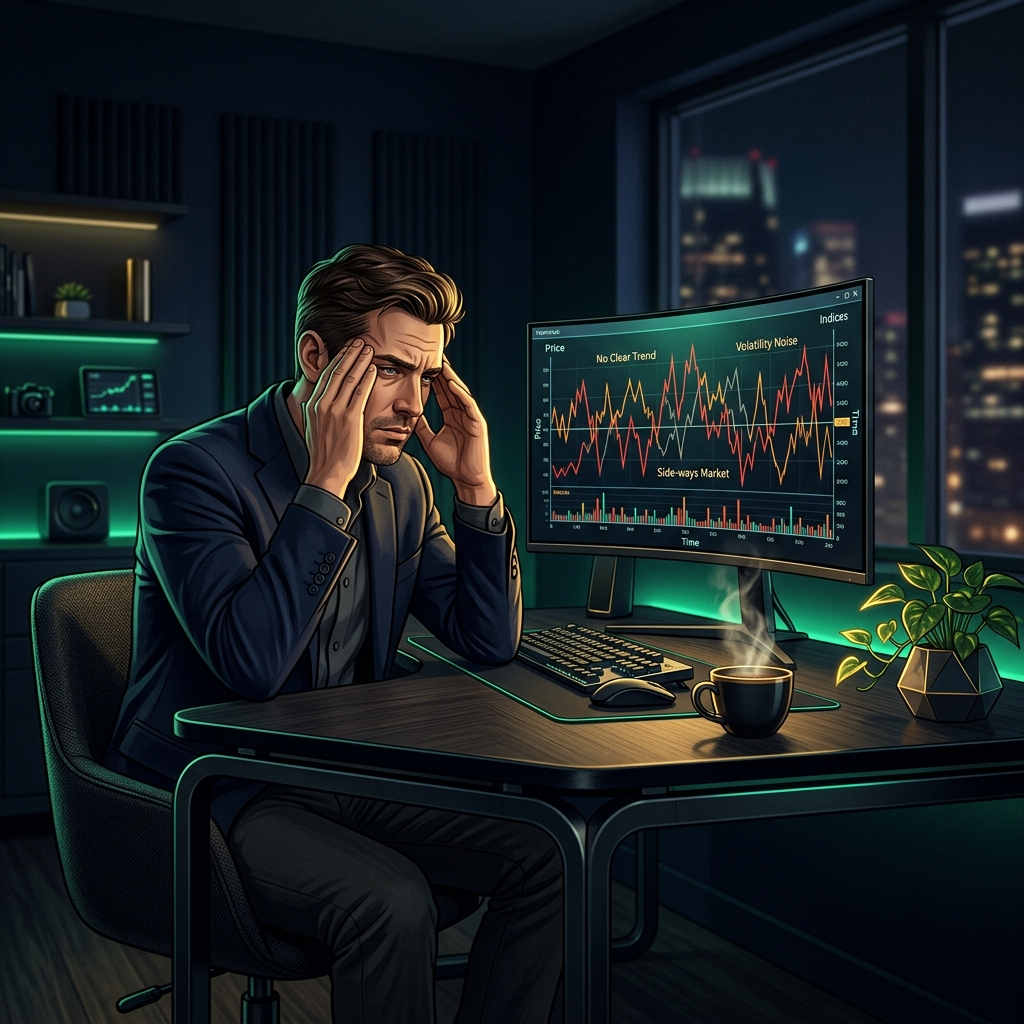
The morning session was beautiful. You caught a clean, high-probability opening drive on the E-mini S&P 500, locked in a nice $400 profit, and felt on top of the world. Now, it's 12:15 PM EST. The charts have crawled into a tight, sluggish sideways channel. Nothing is moving.
Yet, you find yourself staring intently at the screen. Your hand is hovering over the mouse. Your brain, accustomed to decades of a fast-paced corporate or professional career, is whispering: "We have two hours before lunch is over. Let's make another trade. Let's make it a $1,000 day."
You click "Buy Market." Within seconds, the price ticks against you. You exit for a small loss. You reverse and go short. It ticks against you again. Before you know it, your morning profit is gone, and you are down $200 for the day. Welcome to the **Midday Chop Zone** — and the primary reason why disciplined traders blow their funded accounts.
The Science Behind the Midday Lull
To understand why the midday session (typically between **11:30 AM and 1:30 PM EST**) is so dangerous, you have to understand who moves the futures markets.
The vast majority of volume in instruments like the E-mini S&P (ES), Nasdaq (NQ), and Crude Oil (CL) is driven by institutional players—algo funds, commercial banks, hedge funds, and market makers. Around 11:30 AM EST, London market participants begin winding down their day, and New York institutional desk traders leave for lunch or step back to prepare for the afternoon session.
When these big players step away, two things happen immediately:
- Volume Plummets: With fewer orders in the book, price movement loses its directional momentum. The market begins to drift aimlessly.
- Liquidity Thins: Spreads can widen slightly, and large orders can cause erratic, localized "ticks" up and down that have no backing trend. This is "noise."
If you try to trade a momentum-based breakout strategy during this time, you will get **chopped to pieces**. The market simply doesn't have the institutional fuel to sustain a break. It will fake a breakout to the upside, trap the buyers, and drift right back into the middle of the range.
The Anatomical Trap of the Chop Zone
In a low-volume environment, retail stop orders become highly visible targets. Algos and market makers will frequently push price just far enough to clear out the concentrated "stop clusters" above and below the narrow midday range, creating the illusion of a trend before reverting to the mean.
Why Retirees are Uniquely Susceptible
Transitioning from a lifetime of high-responsibility work to retirement creates a massive cognitive shift. Day trading is an incredibly attractive hobby because it offers challenge, structure, and excitement.
However, the qualities that made you successful in your career—resourcefulness, constant action, and "working harder" to solve a problem—will actively destroy your trading capital.
When a business project stalled in your career, you spent more hours in meetings, did more research, and forced a solution. But in the market, **you cannot force the S&P 500 to trend**. Staring at a flat chart and clicking buttons because you have "nothing else to do" is not work; it is expensive entertainment.
Your Playbook: How to Survive the Chop
1. Implement the 'Golden Hours' Rule
The most effective way to eliminate the midday boredom trade is to simply remove yourself from the screen. Establish a strict scheduling rule:
- 9:30 AM – 11:15 AM EST: Active Trading Session (Peak Volume)
- 11:15 AM – 2:00 PM EST: The 'Do Not Touch' Zone (Flat and Walk Away)
- 2:00 PM – 4:00 PM EST: PM PM-Drive Session (Optional, if setups appear)
2. Close Your Platform (Don't Just Minimize It)
Minimizing your trading chart still leaves it active in your mind. If you hear a notification sound, you will open it. Turn off your monitors, close NinjaTrader or Tradovate, and completely step away. If your trading platform is closed, the temptation to "just take a quick trade" is gone.
3. Use a Demo Account for Recreational Clicking
If you absolutely feel the physical itch to trade and click buttons, **switch your account connection to simulation**. Test a wacky strategy, practice placing orders on the DOM, or watch how price acts around VWAP. Scratch the itch without risking your real evaluation or funded prop firm accounts.
4. Find a Midday Routine
Fill the midday void with productive, non-trading habits. Go for a walk, work on a woodworking project, read a book, prepare lunch, or volunteer. Make your trading day short, sweet, and focused.
Retiree Wisdom: Protecting What You Earned
"The best trade you will make today is the one you didn't take when conditions weren't right." Protecting your capital during low-probability conditions is just as profitable as catching a trend during peak hours. If the market is boring, go enjoy your retirement. That's why you retired in the first place!
Related Articles
Brendan Nolan
Retired Trader & Founder
After spending 25+ years as a Product Management executive designing platforms for the nation's top 401(k) and retirement providers, Brendan transitioned into active futures trading in his 60s. He built PropFirmRetiree to help late-career professionals apply disciplined, risk-first principles to prop firm trading.
Read Brendan's Story →