
The Boredom Trade: Why Retirees Overtrade (And How to Stop)
Transitioning from a 40-hour workweek leaves a void. Don't fill it by forcing trades that aren't there.
You spent the last 40 years of your life solving problems, managing people, and staying constantly busy. Now you're retired. You have a funded prop firm account, a brand new computer setup, and a cup of coffee. You sit down at 9:30 AM EST. By 10:00 AM, the market is chopping sideways. Nothing is happening.
So, what do you do? You click the mouse. You find a reason to enter a trade, not because your proven edge has presented itself, but because you are bored. Welcome to the "Boredom Trade" — the silent killer of retiree trading accounts.
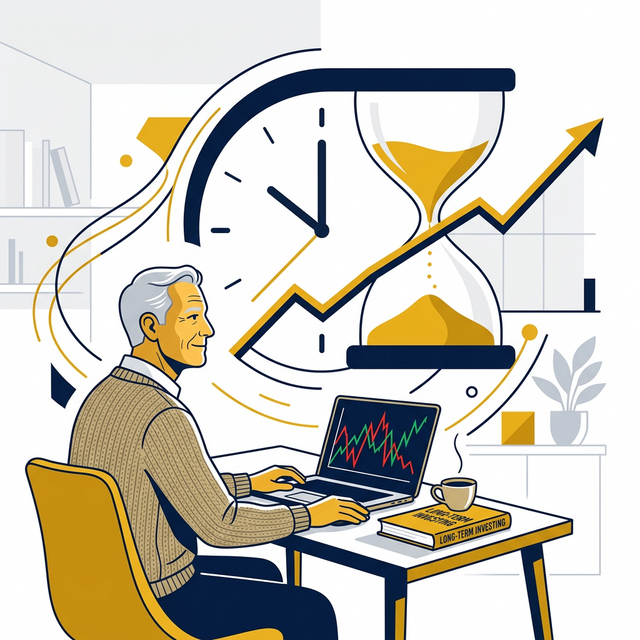
The Psychology of the Boredom Trade
For decades, your brain was rewarded for action. If you had a problem at work, you took action to fix it. If a project was stalling, you pushed it forward. You were paid for your time and your output.
Trading is the exact opposite. As a retail futures trader, you are paid for your patience. The market does not care that you allocated four hours this morning to "work." If your strategy says a high-probability A+ setup only happens twice a week, then spending the other 38 hours clicking buttons is purely recreational gambling.
The Symptoms of Boredom Trading
- Flipping to the 1-minute or 15-second chart to "find action."
- Taking a "small size" trade just to have a position open.
- Justifying a C-minus setup because it "looks close enough."
- Feeling physical anxiety or restlessness when flat (no open positions).
How to Stop the 'Need for Speed'
1. Separate Your Workspace
If you use your primary desktop computer to trade, read the news, watch YouTube, and check email, the lines blur. Your trading platform should not be an entertainment hub. Close the charts when you are done executing your edge.
2. The 'If/Then' Rule
Before the market opens, write down your exact requirements for a trade. "If the NQ pulls back to the 20 EMA on the 5-minute chart, and prints a bullish pin bar, then I will enter long." If that specific scenario does not happen, you do not touch the mouse.
3. Find a Non-Trading Hobby
You cannot replace a 40-hour career solely with day trading. Day trading, if done correctly, should take no more than 1 to 2 hours of your time each day. You need a secondary outlet for your energy — golf, woodworking, volunteering, or reading. Do not use the S&P 500 as your primary source of daily entertainment.
The Golden Rule for Retirees
"Your job as a trader is not to trade. Your job is to wait." Accept the boredom. Embrace flat days. Your prop firm evaluation account will thank you.
Related Articles
Brendan Nolan
Retired Trader & Founder
After spending 25+ years as a Product Management executive designing platforms for the nation's top 401(k) and retirement providers, Brendan transitioned into active futures trading in his 60s. He built PropFirmRetiree to help late-career professionals apply disciplined, risk-first principles to prop firm trading.
Read Brendan's Story →